
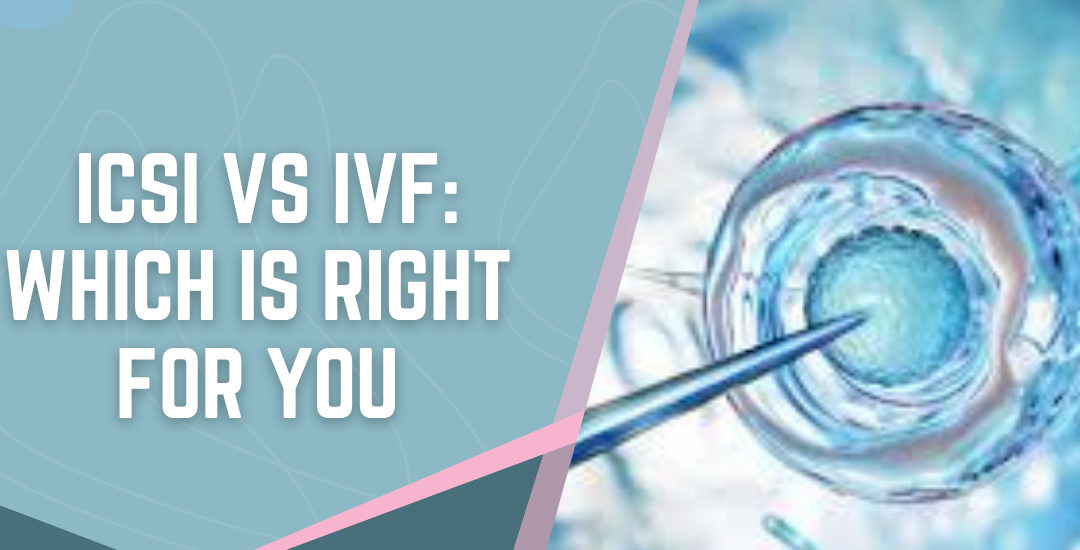
ICSI and IVF are both assisted reproduction procedures, but ICSI is the call when sperm can’t fertilize an egg without help, while IVF works when sperm function is normal and the infertility cause sits elsewhere. The difference is what happens inside the lab: ICSI means one sperm gets injected directly into each egg, conventional IVF lets fertilization happen on its own in a dish. Semen analysis, cycle history, and how the sperm was collected that’s what drives the decision.
According to Dr. Prajna Shetty, an experienced fertility specialist in Nerul, A failed IVF cycle with good eggs and poor fertilization is almost always a sperm penetration problem and that’s exactly what ICSI is designed to fix at the lab stage.
What Is the Difference Between IVF and ICSI?
Both start identically stimulation, retrieval, transfer but the fertilization step inside the lab is where they go completely separate ways.
- How fertilization works: Standard IVF puts eggs in a dish with thousands of sperm and waits. It’s reliable when sperm count, movement, and shape are all decent, but the sperm still has to do the work of finding and entering the egg on its own.
- What ICSI changes: An embryologist picks one sperm under a microscope and injects it straight into the egg. The sperm doesn’t need to swim anywhere or push through the egg’s outer layer that entire step is skipped, which matters enormously when sperm function is poor.
- After that point: Both methods produce embryos that get transferred to the uterus exactly the same way. Once fertilization’s done, the pregnancy process is identical. So it’s not that one is better overall it’s that one fits certain semen profiles and the other doesn’t.
- What drives the call: Semen analysis is the biggest input, but previous fertilization failure, surgically retrieved sperm, and borderline results with unexplained infertility all push the recommendation toward ICSI even when the count looks okay on paper.
If motility is flagged on your report or you’ve already had a failed cycle, a specific conversation about ICSI treatment is the most direct next move.
When Is ICSI Recommended Over IVF?
ICSI has clear clinical triggers. Using it without those triggers doesn’t improve fertilization rates or live births, so it’s not a standard upgrade it’s a specific fix for specific problems.
- No sperm in the ejaculate: Men with azoospermia need surgical retrieval through TESA or PESA, and the numbers that come back are tiny nowhere near enough for dish fertilization, so ICSI is the only option and each retrieved sperm gets used individually with precision.
- Last cycle didn’t fertilize: Good eggs, poor or zero fertilization that’s the scenario where ICSI gets switched in next time without much debate, because leaving it to chance again with dish IVF doesn’t make clinical sense when the fertilization step is clearly where things broke down.
- Sperm numbers are too low: Counts under 5 million per ml, motility below 32%, or major morphology defects on Kruger criteria mean conventional IVF probably won’t produce enough fertilization to work with, and IVF treatment with ICSI becomes the planned approach rather than the fallback.
- No clear diagnosis on either side: Some couples with genuinely unexplained infertility do better with ICSI, probably because routine semen tests don’t catch every functional problem affecting how sperm actually behaves when it’s next to an egg in a dish.
But fertilization is only part of the picture. The uterine lining has to be ready too our blog on endometrial thickness for IVF covers what needs to be right before any embryo gets transferred
Why Choose Dr. Prajna Shetty?
Dr. Prajna Shetty has spent 15 years working specifically in reproductive medicine, with a practice that leans heavily into male factor infertility, repeated IVF failure, and TESA-assisted ICSI for azoospermia the cases that get referred after other clinics haven’t been able to move things forward. Her FNB in reproductive medicine means the IVF versus ICSI decision is built on what the actual lab numbers say, not what the default protocol suggests.
What patients consistently mention is how clearly she walks through the fertilization report after a failed cycle not in vague terms, but pointing to the specific numbers that flagged the problem and explaining exactly what changes in the next attempt and why.
Not sure which procedure your semen report is pointing toward?
Frequently Asked Questions
What is the main difference between IVF and ICSI?
In IVF, sperm fertilizes eggs naturally in a dish. In ICSI, one sperm is injected directly into each egg.
Who needs ICSI instead of conventional IVF?
Men with low count, poor motility, abnormal morphology, or surgically retrieved sperm typically need ICSI.
Does ICSI improve pregnancy rates for everyone?
No. It improves fertilization specifically in male factor cases and doesn’t help when sperm is normal.
Can ICSI be used after a failed IVF cycle?
Yes. Zero or poor fertilization in a prior IVF cycle is a direct indication for ICSI in the next attempt.
References:
- ICSI vs Conventional IVF — Indications and Fertilization Outcomes — National Institutes of Health / PubMed
- Assisted Reproduction: IVF and ICSI Clinical Guidelines — ESHRE — European Society of Human Reproduction and Embryology