
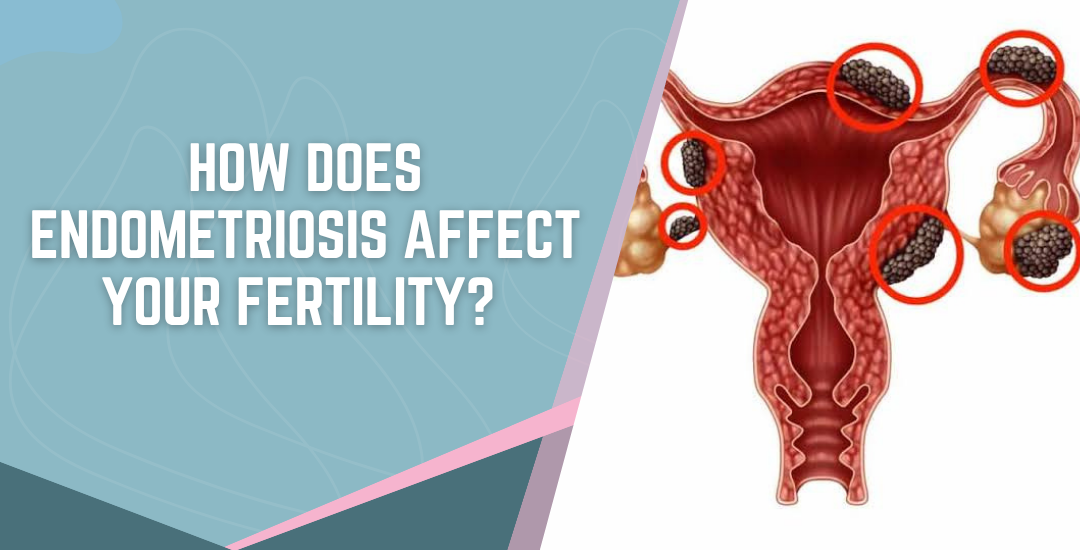
Endometriosis sits behind 30 to 50% of female infertility cases. Many women carrying it had no symptoms worth reporting. Tissue grows where it shouldn’t, bleeds every cycle, and scars what’s around it. That inflammation doesn’t just block tubes. It changes the follicular fluid, affects egg development, and makes the uterine lining less receptive to embryos. Stage doesn’t reliably predict impact either. Stage 1 can be harder to manage than Stage 3. It’s not linear.
According to Dr. Prajna Shetty, an experienced fertility specialist in Nerul, “Endometriosis doesn’t follow a predictable pattern when it comes to fertility, which is why the clinical workup matters as much as the diagnosis itself.”
How Does Endometriosis Physically Damage Fertility?
Endometriosis doesn’t damage fertility through one pathway. Several things go wrong at once, often compounding each other.
- Ovarian reserve: Endometriomas on the ovary drive chronic oxidative stress into adjacent follicular tissue, dropping AMH and antral follicle count well before any surgery is considered.
- Tubal function: Lesion-related adhesions obstruct sperm and egg transport, and peritoneal inflammation from active disease also slows ciliary beat inside the tubes.
- Oocyte quality: The follicular environment is biochemically altered in endometriosis patients, with oxidative stress responses in oocytes confirmed by single-cell RNA studies even when retrieval numbers appear adequate.
- Implantation failure: Ectopic tissue disrupts endometrial receptivity, contributing to failed implantation that isn’t explained by embryo quality or uterine structure alone.
Before any treatment decision is made, knowing exactly how the disease has affected ovarian reserve is the first step, and everything that assessment involves is covered on the endometriosis treatment section.
What Are the Treatment Options When Endometriosis Affects Fertility?
No single protocol fits. Stage, age, reserve, and time pressure all shape what’s actually appropriate.
- Surgical excision: Laparoscopic removal restores pelvic anatomy and can improve natural conception rates, though ovarian cystectomy carries documented AMH reduction risk that has to be weighed carefully.
- IVF for moderate to severe disease: In 1124 reviewed IVF treatment cycles, endometriosis patients consistently showed lower AMH and AFC independent of prior surgery, producing fewer embryos, so stimulation protocols get adjusted specifically for them.
- IUI or expectant for mild cases: Stage 1 or 2 with intact tubes and reasonable reserve doesn’t always need IVF first, particularly in patients under 35 where time allows a less aggressive approach.
- Egg freezing before repeat surgery: AMH drops measurably after each ovarian cystectomy. Banking eggs or embryos before a second or third procedure isn’t optional, it’s protective.
For more on what reduced reserve means once treatment planning starts, our previous blog on poor ovarian reserve covers what the numbers mean for IVF success and what options remain.
Why Choose Dr. Prajna Shetty?
Dr. Prajna Shetty holds an MBBS, DGO, DNB in Obstetrics and Gynaecology, and an FNB in Reproductive Medicine. Fifteen years in reproductive medicine. She’s trained in fertility-enhancing laparoscopic surgery and has a specific interest in endometriosis, recurrent implantation failure, poor ovarian reserve, and oncofertility. ESHRE, ISAR, and IFS member.
The endometriosis and the fertility goal get treated as one problem, not handed off to separate conversations.
Worried endometriosis is affecting your chances of conception?
Frequently Asked Questions
Can women with endometriosis get pregnant naturally?
Yes, many women with mild to moderate endometriosis conceive naturally, though it may take longer depending on disease stage and ovarian reserve.
Does endometriosis surgery improve fertility chances?
Surgical removal of lesions and adhesions can improve conception chances in some cases but may also reduce ovarian reserve if cysts are involved.
Is IVF effective for women with endometriosis?
IVF is used for endometriosis-related infertility, though success rates may be lower in advanced stages due to reduced ovarian reserve and embryo numbers.
Does endometriosis always cause infertility?
No; some women with endometriosis conceive without difficulty, while others face challenges depending on the extent and location of the disease.