
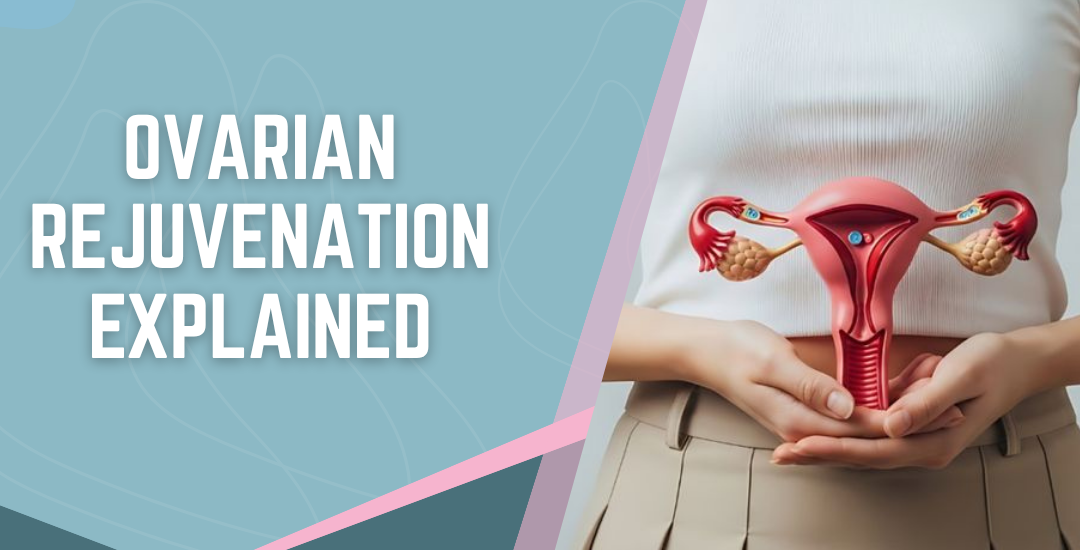
Platelet-rich plasma drawn from a woman’s own blood, processed and injected directly into the ovarian tissue. That’s essentially what ovarian rejuvenation is. The growth factors in PRP are thought to stimulate follicular activity, potentially push AMH levels up, and improve egg quality in women where standard fertility treatment has stopped working. It won’t undo years of age-related decline, and it’s definitely not a guaranteed route to pregnancy. But for certain patients it can make an IVF cycle possible that simply wasn’t before.
According to Dr. Prajna Shetty, an experienced fertility specialist in Nerul, Ovarian rejuvenation works by introducing growth factors into ovarian tissue that may reawaken dormant follicles, but patient selection matters more than the procedure itself.
Who Actually Benefits From Ovarian Rejuvenation?
Patient selection is what makes or breaks this procedure. PRP isn’t useful for everyone with a fertility problem.
- Poor IVF responders: Women whose ovaries produce too few mature eggs despite adequate stimulation medication are the most studied group for intraovarian PRP.
- Low AMH: Candidates with AMH so low that a standard IVF cycle would retrieve nothing useful are considered for PRP to improve the ovarian environment before the next attempt.
- Premature ovarian insufficiency: Some women with POI have shown improvement in AMH and menstrual restoration after PRP, though outcomes are inconsistent and evidence is still developing.
- Repeated IVF failure due to poor response: Women who failed multiple cycles specifically because of ovarian response, not implantation or embryo quality, are reasonable candidates before moving to donor eggs.
Women with normal reserve or failed cycles from implantation issues won’t benefit, and IVF treatment should be the direct focus in those cases.
What Can It Realistically Achieve?
Some patients respond well. Others don’t. Age and baseline reserve are the biggest predictors.
- AMH improvement: A patient’s clinical study found AMH levels, antral follicle count, and mature oocyte yield all improved after intraovarian PRP in women with poor ovarian response.
- Pregnancy outcomes: The same study reported a pregnancy rate of 20.5% and live birth rate of 12.9% in women with a mean age of 40 who had already failed conventional stimulation.
- Low risk: The procedure uses the patient’s own blood, takes 15 to 20 minutes under ultrasound guidance, and doesn’t require general anaesthesia.
- Not a standalone: PRP supports a planned IVF cycle and women already in natural menopause with undetectable AMH have very limited response rates.
Women where fertility preservation was delayed should read this poor ovarian reserve breakdown first to understand the full clinical picture before deciding on a treatment path.
Why Choose Dr. Prajna Shetty?
Dr. Prajna Shetty holds an MBBS, DGO, DNB in Obstetrics and Gynaecology, and an FNB in Reproductive Medicine, with over 15 years of clinical experience in reproductive medicine. She has a specific interest in poor ovarian reserve management and oncofertility, and is an active member of ESHRE, ISAR, and IFS.
She won’t recommend a procedure if the clinical profile doesn’t support it. Every case is evaluated on actual evidence, not optimism.
Low AMH and running out of conventional options?
Frequently Asked Questions
Who is a good candidate for ovarian rejuvenation?
Women with low AMH, poor ovarian reserve, premature ovarian insufficiency, or poor response to IVF stimulation are the primary candidates.
Does ovarian PRP guarantee pregnancy?
No; PRP can improve ovarian reserve markers and IVF response in suitable candidates but does not guarantee conception.
How long after PRP can IVF be attempted?
AMH and AFC are typically monitored for 4 to 8 weeks after PRP before deciding whether to proceed with an IVF cycle.
Is ovarian rejuvenation a painful procedure?
The procedure is minimally invasive, performed under ultrasound guidance, and most women report only mild discomfort.